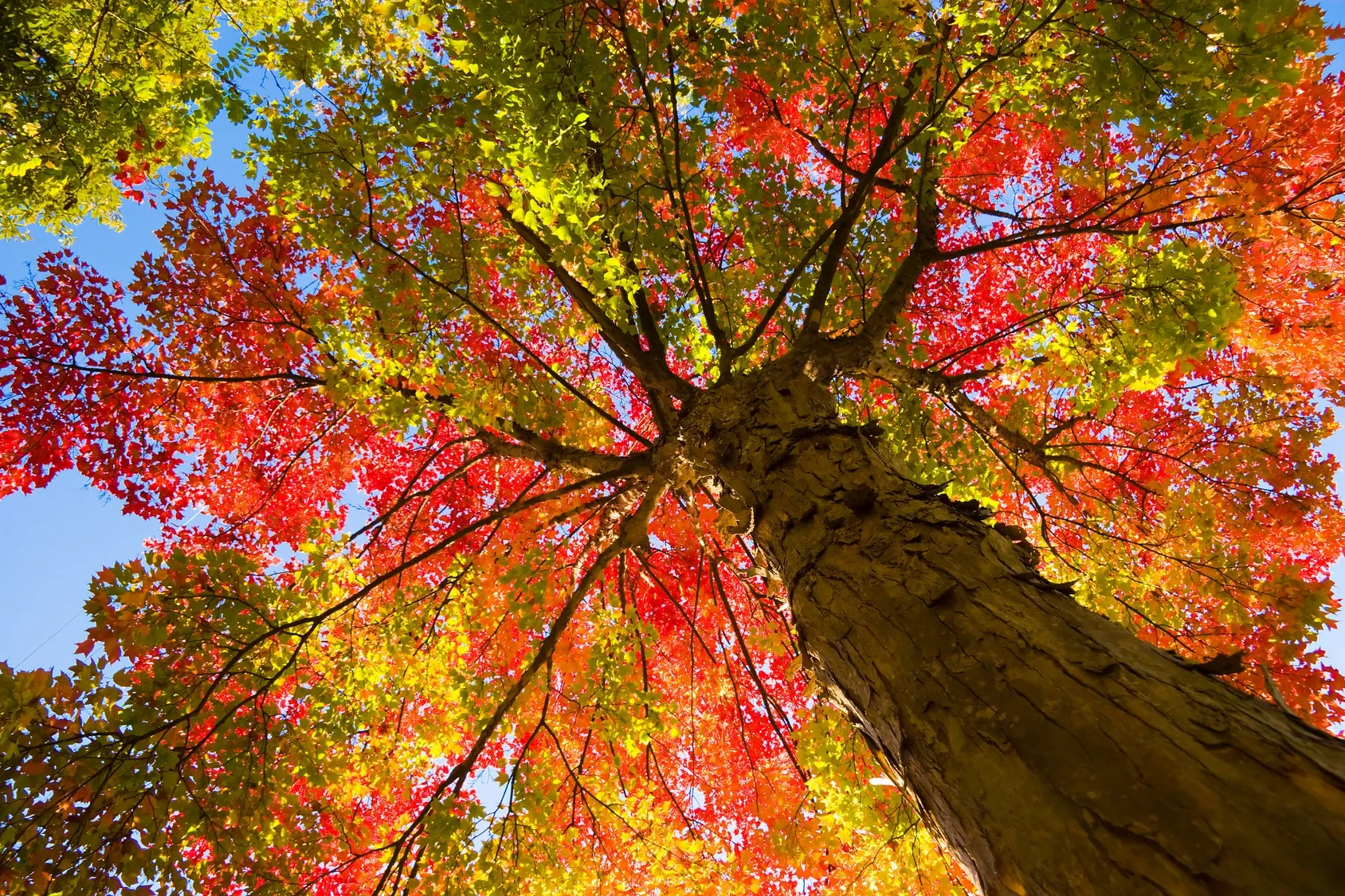
In Maryland, the sight of leaves drifting to the ground is usually synonymous with pumpkin spice and cooler temperatures. However, for a keen-eyed homeowner, the way a tree loses its foliage is a diagnostic map of its health. Understanding how falling leaves can reveal tree problems is one of the most effective ways to catch "silent" issues, like root rot, vascular disease or pest infestations, before they lead to a total tree failure.
At Genesis Tree Care, we view leaves as the early warning system of a tree. They are the first to show signs of distress when the tree's internal systems are struggling. This guide will teach you how to read the leaves to determine if your tree is simply enjoying a seasonal rest or if it's crying out for professional help.
1. Timing: The Early Shedder
The most obvious clue is when the leaf drop occurs. If your maples or oaks are dropping a significant amount of foliage in July or August while the rest of the neighborhood is lush and green, you are seeing a "stress drop."
Knowing how falling leaves can reveal tree problems starts with recognizing this survival mechanism. When a tree is under extreme heat or drought stress, it sheds leaves to reduce its water consumption. However, if the ground is moist and the tree is still shedding, it could indicate a more serious issue like root rot. If the roots are dying, they can't supply enough water to the top of the tree, forcing the early shed.
2. Pattern: Top-Down vs. Bottom-Up Dieback
The pattern of where the leaves fall from first can tell you exactly which part of the tree is failing.
- Top-down dieback: If the leaves at the very tip of the canopy turn brown and fall off first, it often points to a vascular problem or soil compaction. The tree is struggling to push nutrients to its furthest extremities.
- Bottom-up or inside-out: If the interior or lower leaves are falling, it might simply be a lack of sunlight. However, in evergreens like the Leyland cypress, this is a classic sign of needle cast fungus, which thrives in Maryland's humidity.
3. Discoloration: Spots, Blotches and Bronzing
When a leaf falls, take a close look at its surface. Healthy autumn leaves change color uniformly, but a diseased leaf usually looks "messy."
- Target spots: Small, circular brown spots with a yellow ring (halo) often indicate a fungal infection.
- Bronzing: If leaves turn a dull, metallic brown before falling, it is a hallmark sign of oak wilt, a devastating disease in the Annapolis area.
- Sooty mold: If the falling leaves are covered in a black, sticky film, you have a pest problem. Sucking insects like aphids or scale are feeding on the tree and secreting "honeydew," which grows mold. A certified arborist can treat this before the tree is completely defoliated.
4. Size and Shape: Stunted Growth
Another way falling leaves can reveal tree problems is through their shape and size. If the leaves that are falling are significantly smaller than they were in previous years, the tree is suffering from chronic stress.
Stunted leaf size indicates that the tree didn't have enough energy during the spring flush to develop full-sized foliage. This is often caused by long-term root damage or nutrient deficiencies in the soil. Over time, smaller leaves mean less photosynthesis, which leads to a weakened structure that may eventually require emergency tree removal.
5. Debris: What Else Is Falling?
Sometimes it's not just the leaves that are hitting the ground. Pay attention to what accompanies the foliage.
- Fine "sawdust": If you see leaves mixed with fine wood dust (frass), you likely have wood-boring beetles.
- Dead twigs: If small, brittle twigs are falling along with green leaves, the tree is self-pruning because it can no longer support its own weight. This is a sign of declining structural integrity and a warning that you may soon need storm damage restoration if a limb snaps.
FAQ: Reading Your Falling Leaves
Why is my tree dropping green leaves in the summer?
This is often a reaction to a sudden change in weather. However, if it's a high volume, it may be a sign of a pest like the jumping oak gall or a vascular disease.
Can I use diseased fallen leaves for compost?
No. Many fungi, like anthracnose or apple scab, can survive the composting process. It is better to bag and remove diseased leaves from your property to prevent reinfection next spring.
Does a thin canopy always mean the tree is dying?
Not always, but it is a sign of low vigor. It may be saved through deep-root fertilization and proper landscaping and mulching to improve soil health.
What should I do if I see mushrooms on the falling leaves?
Mushrooms on the leaves themselves are often just decomposers. However, if you see mushrooms on the trunk while the leaves are falling, that is a sign of heart rot and a serious safety hazard.
Conclusion
The next time you're raking your yard, take a moment to look at what you're gathering. Understanding how falling leaves can reveal tree problems is a powerful tool for any Maryland homeowner. Those fallen leaves are giving you a glimpse into the hidden world of your tree's health; don't ignore the message they're sending.
If your trees are showing clues you can't decipher, the team at Genesis Tree Care is here to help. Our experts can provide a full diagnostic assessment of your canopy, so your trees remain healthy, safe and vibrant for years to come.
Read the signs before it's too late: schedule a tree health assessment with Genesis Tree Care.